2017 was an historic water year in Idaho. The snowpack throughout southern Idaho was well above average. That means there is a lot of runoff from snow melt.
Much of the snow melt finds it’s way into the Snake River, one of the longest rivers in the United States. The Snake has it’s headwaters in Yellowstone National Park in Wyoming. It courses across the entire southern section of Idaho, through Hell’s Canyon along the Oregon Idaho border before emptying into the mighty Columbia River in Washington state. The Snake is the largest tributary of the Columbia River.
One of the natural wonders along the Snake River is Shoshone Falls near Twin Falls. In many months and years, little or no water flows over the falls, having been diverted up river for irrigation use during the hot dry summer months. However, in years like 2017, Shoshone Falls puts on a spectacular show.
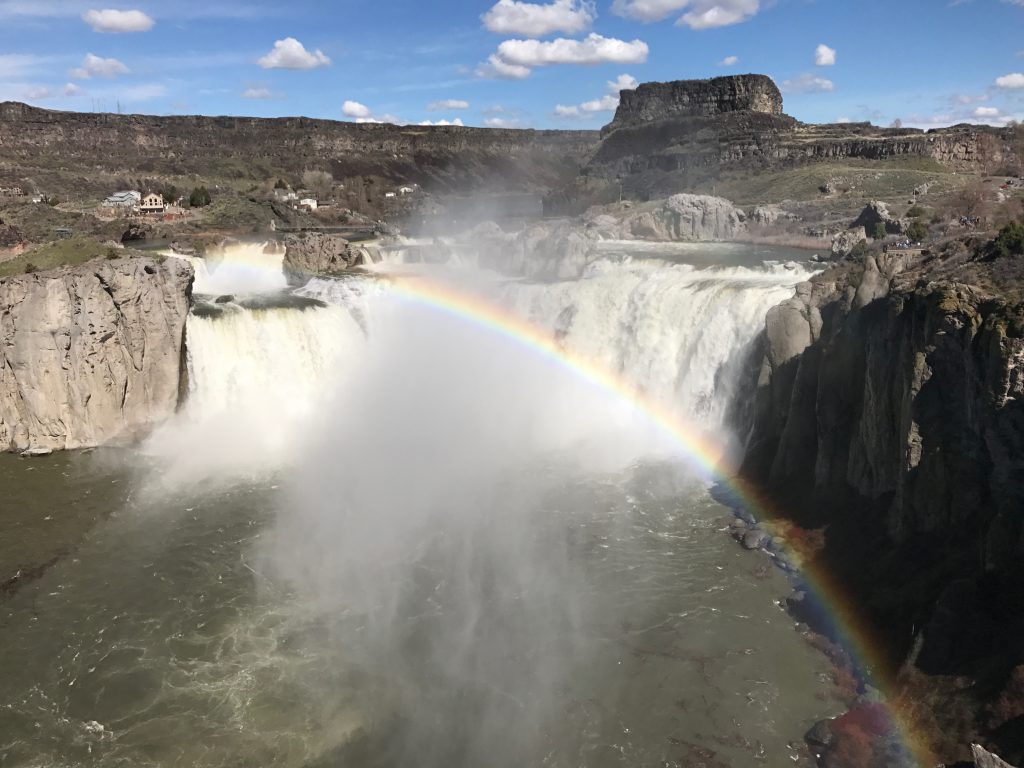
At 212 feet tall and almost 1000 feet wide, Shoshone Falls are actually higher than Niagara Falls. One can easily get drenched by the mist and rainbows are a frequent phenomenon.
Spring is the best time to visit Shoshone Falls. If you ever get the chance, plan a visit to see this wonder.
 ly reachable in the summer by a long narrow twisty dirt mountain road. 4WD advised. It sits at 6,200′ in the Owyhee Mountains of southwest Idaho and winter access is by snowmobile. You really have to want to visit this place similar to getting to Bodie, CA.
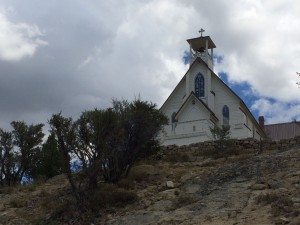 There are currently about 75 remaining buildings, all privately owned and in various states of restoration. One of the buildings is Our Lady of Tears Catholic Church where Mass is still said. How would you like to be the priest that has that duty each week? There is no easy access to the church. One must climb the hill pictured to the right. There are no stairs, just series of rock outcroppings. They have added a safety rail, however.